

About Kelowna Karate
Kelowna Tsuruoka Karate Club has been a pillar of traditional karate in British Columbia since 1971.
As the oldest established karate club in Kelowna, we honour the rich history of our art while evolving to meet the needs of modern practitioners. Rooted in the teachings of Masami Tsuruoka and influenced by both Chito-Ryu and Shotokan styles, our club continues to foster discipline, self-defence, and personal growth.
Club Beginnings
Founded in 1971 by Mr. Warren Maurer, a 4th-degree black belt, our club has been a part of the Parkinson Recreation Centre since its opening. Over the decades, we have trained generations of martial artists, always emphasizing the values of respect, perseverance, and technical excellence.
We are proud members of Karate BC, ensuring that our instruction aligns with provincial and national standards. Our senior instructors hold both Black Belt Certifications and National Coaching Certification Program (NCCP) credentials, giving students the confidence that they are learning from experienced and certified professionals.
From China to Okinawa: The Birth of an Art
The Evolution of Karate
Karate’s origins can be traced back to China, where various martial arts systems emphasized striking techniques, forms, and self-defence strategies. Over time, these influences made their way to Okinawa through trade and cultural exchanges. At the time, Okinawa was an independent kingdom, and kara-te (then meaning “Chinese hand”) was practiced primarily by the royal guard and select individuals.
When Japan annexed Okinawa in the 19th century, strict weapon bans were imposed, forcing Okinawan martial artists to refine their unarmed combat techniques into what would later become modern karate.
Karate in Japan
A New Identity
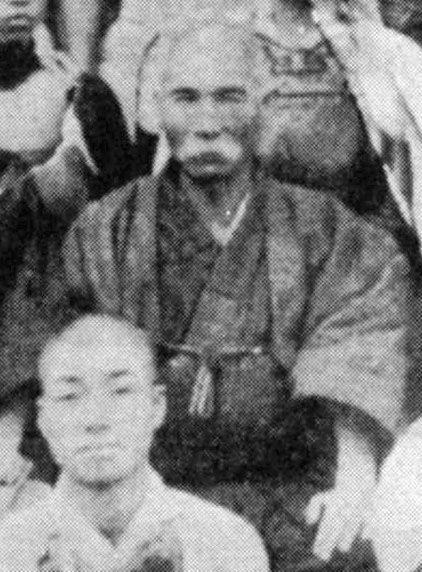
Anko Itosu, a key figure in karate’s history, recognized the value of this martial art for developing discipline, physical fitness, and self-defence skills. He introduced karate into Okinawan schools, making it more accessible to the general public. One of his students, Gichin Funakoshi, further transformed karate by bringing it to mainland Japan.
During this transition, Funakoshi changed the meaning of “kara” from “Chinese” to “empty,” reflecting both a philosophical shift and an effort to establish karate as a uniquely Japanese martial art. This change helped integrate karate into Japanese society, where it flourished in universities and martial arts organizations.
Masami Tsuruoka
Bringing Karate to Canada
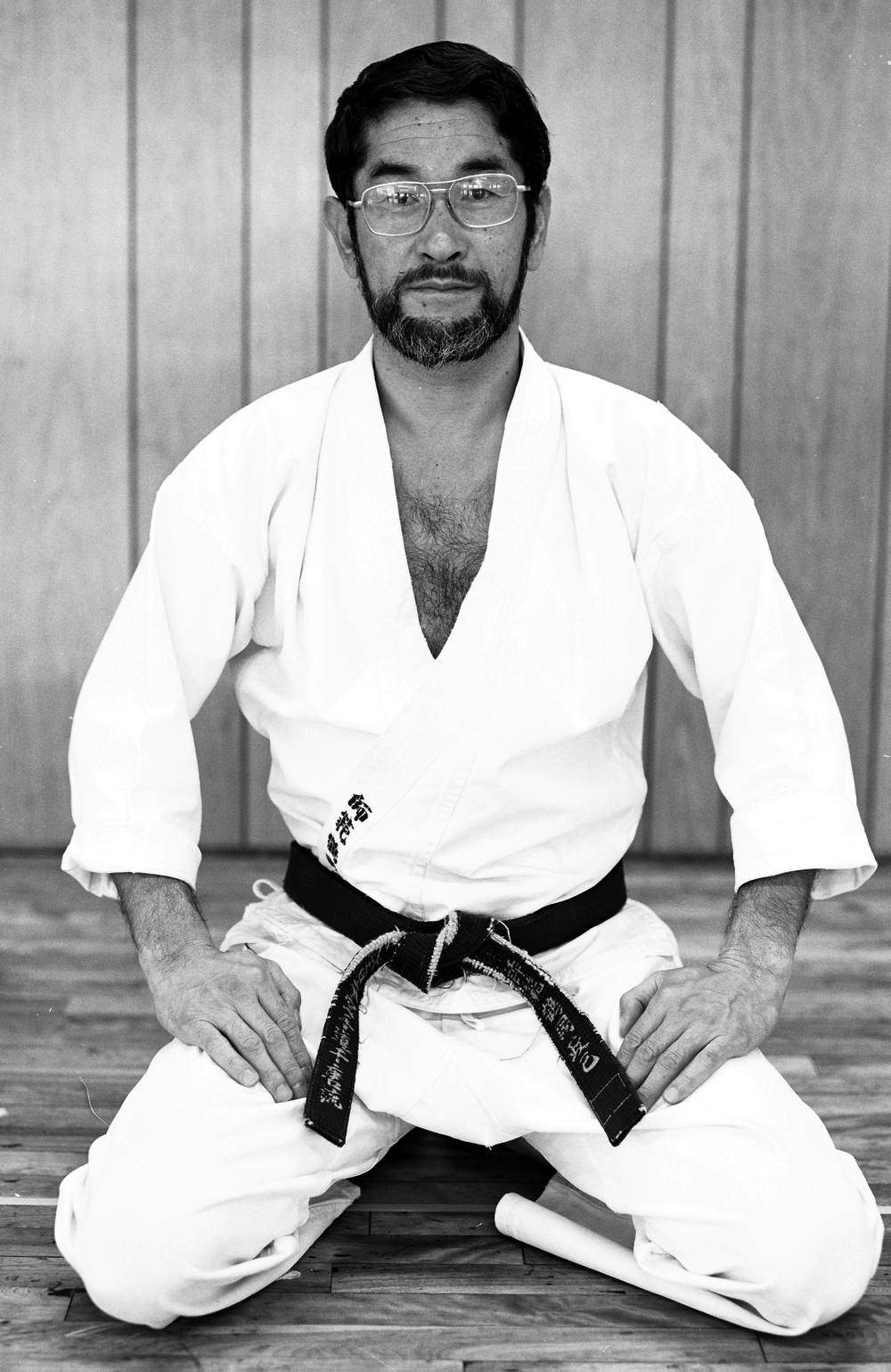
In the mid-20th century, karate spread beyond Japan, reaching new practitioners around the world. Masami Tsuruoka, known as the father of Canadian karate, played a vital role in this expansion. After training under Dr. Chitose, the founder of Chito-Ryu Karate, Tsuruoka returned to Canada and opened one of the country’s first karate dojos. His efforts to promote and modernize the art led to the formation of Karate Canada, the national governing body for the sport.
Tsuruoka’s influence extended beyond administration—his dedication to teaching and developing skilled martial artists laid the foundation for many dojos across Canada, including our own. His philosophy emphasized adaptability, effectiveness, and the continuous evolution of karate as both a self-defence system and a means of personal growth. Today, his teachings continue to shape how karate is practiced and taught across the country.
A Living Tradition
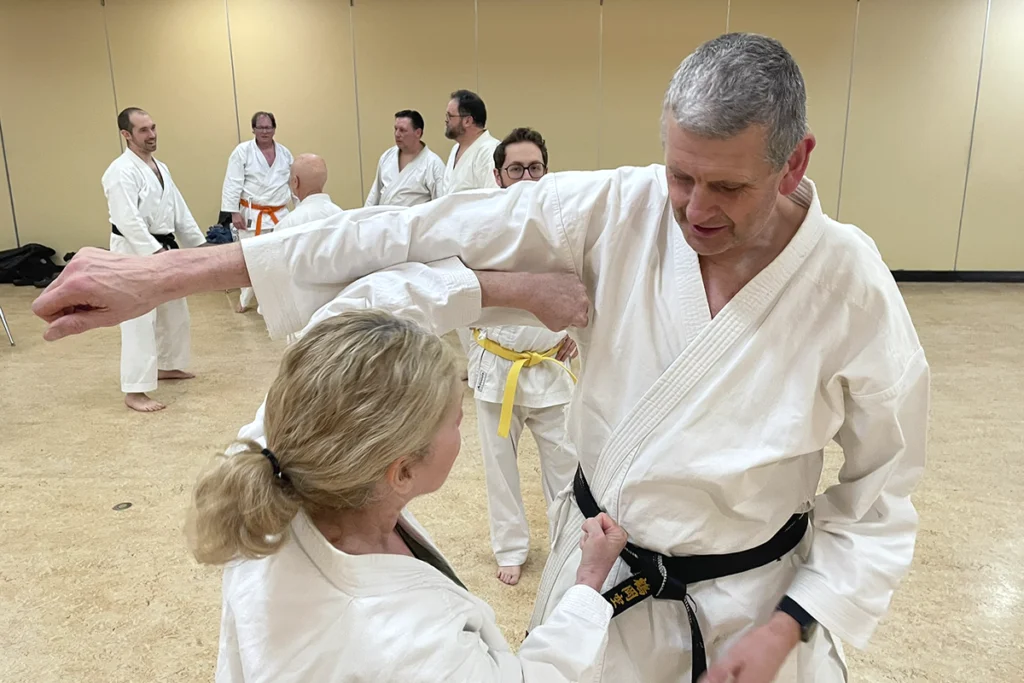
Kelowna Tsuruoka Karate Club is part of this evolving history. Our approach reflects our founder’s belief: “My style is that I have no style.” Karate is not static—it must adapt to the individual and the times. While we uphold our strong foundation in traditional Chito-Ryu and Shotokan karate, we also incorporate modern self-defence techniques and training methods to keep our students prepared for today’s world.
For over 50 years, our club has been a place where students of all ages and backgrounds come together to learn, train, and grow. We are committed to preserving the legacy of karate while ensuring that each generation of students gains the skills, confidence, and character to make it their own.